Tuesday, 14 May 2013

Doom Patrol, by Grant Morrison and Richard Case

Comics are often maligned as inferior reading to books, as though children who read comics will never be able to make the leap to books without pictures. This belief is mainly born of ignorance, a lack of recognition that comics are an entirely different medium. Despite being seen as juvenilia comics can also be decidedly adult - Alan Moore and Dave Gibbons’s Watchmen is probably the most famous example. They can tell stories far removed from the superhero genre they are most associated with. Art Speigelman’s Pulitzer winning Maus, and Marjane Satrapi’s Persepolis are two of the most moving stories I have come across in any medium, with their autobiographical stories of life in totalitarian regimes. During his run with Animal Man, Grant Morrison wrote in The Coyote Gospel an absolutely perfect piece of short fiction. The point of all this being that comics are not what people-who-don’t-read-comics think they are.

But right now I’m reviewing Grant Morrison’s Doom Patrol. Which is exactly what people-who-don’t-read-comics think it is. No, that is doing it an injustice. It is just that it seems to be that at first glance: a bunch of misfit superheros saving the world from bizzaro baddies. Morrison is way too canny, and wacky, a writer to let it follow predictable paths. During his four year run writing Doom Patrol he created a unique piece of work. It is important to be clear, for people-who-don’t-read-comics, that reading the six volumes of Doom Patrol is not quite the same thing as reading a book. It was released as monthly episodes that have now been collated. They were intended to be read individually rather than in one go. As my husband put it, it is akin to watching Dr Who, episodic and self-contained, but with storylines that span episodes and even whole series. A linear mindset to storytelling is not always appropriate, and is especially not so in the case of Doom Patrol.

The Doom Patrol is an unusual group of characters, led by a paraplegic doctor; the parallels to the X-Men are obvious. This appears to be uncanny coincidence rather than copying; both were first published in 1963, with Doom Patrol out a mere four months earlier. Clearly it hasn’t seeped into common consciousness the way X-Men has, and it has been dropped and revived a number of times over the last forty years. I’m not familiar with other Doom Patrol series, so I can’t tell you what they are like. Morrison began his run with the series in 1989.

Morrison’s Doom Patrol revolves largely around two characters: Cliff, the brain of an ex-racing car driver housed in a robot after a catastrophic crash, and Crazy Jane, a young woman with multiple personality disorder, where each personality has its own superpower. They make up part of a gang, which includes a cross-dressing sentient street called Danny (my favourite character), and three spirits amalgamated in one psychic, hermaphrodite form named Rebis. There is no denying it is all pretty strange. The various baddies are also a surreal bunch - literally so, in the case of The Brotherhood of Dada.

Amongst all the surreal action Morrison has crafted a story with elements of genuine pathos. All of his lead characters are victims, trying to find somewhere to belong, carrying their fractured sense of identity with them. For all his super-human strength Cliff no longer has a sense of touch, of taste, or smell. Despite his origins, he is no longer a man. I found myself a little frustrated that both the female characters Crazy Jane, and the teenage Dorothy, are victims because of their gender and sexuality. Maybe it says something about the type of world we live in. Or maybe it just says something about the imaginations of male authors… Nonetheless some of the best and most emotional chapters in Doom Patrol revolve around Crazy Jane. Chapter 30: Going Underground in which we travel into the subway of her unconscious is pure genius.

The detail in these comics is incredible, whether Morrison is aiming for humour or in a serious mood. Much of this is conveyed in the artwork, for which Richard Case deserves credit as the penciller for the series. I don’t have the terminology to discuss the artwork in depth, but it is clear to me that the artwork for this is of a very high quality and excels at capturing the shifting tones of the story.

If you are a person-who-does-not-read-comics, I’m not sure I would recommend Doom Patrol as the place to start (unless, of course, Un Chien Andolou is your dream Saturday night movie). It is a wonderful series, which combines horror, surrealism, and humour to great effect. For all the freewheeling narrative of the series, Morrison gives the series the memorable bittersweet ending it deserves.

Saturday, 27 April 2013

The Farseer Trilogy, by Robin Hobb

Robin Hobb is a much admired and respected fantasy author. I actually read the Farseer trilogy (Assassin’s Apprentice, Royal Assassin, and Assassin’s Quest) as a teenager, but recently picked them up again. The trilogy follows many of the tropes of fantasy fiction: a faux-medieval world, royal intrigue, magic. Hobb’s world building is excellent and imaginative, so the books do bring something different to the fantasy market.

Fitzchivalry (Fitz), the illegitimate son of a prince, pledges his life to his grandfather King Shrewd. Aged only eleven, he is then apprenticed to Chade, the King’s mysterious assassin. The Six Duchies are under threat from the Outislanders, who no longer simply plunder, but strip humanity from their captives – leaving them only capable of fulfilling animal desires - then release them to wreak havoc on their neighbours. Prince Verity, Fitz’s uncle, is determined to save his Kingdom. Out of love for Verity as much as anything else, Fitz sacrifices much to help. He faces another more insidious threat in the form of his half-uncle Prince Regal, a jealous, manipulative young man who is determined to inherit the throne himself. Meanwhile the Fool takes an interest in Fitz, riddling about prophecies.

The story is narrated by Fitz as an older man. He is not the most admirable of characters; he is often sullen and selfish, but Hobb always keeps him on the right side of likable. It is only fitting behaviour, perhaps, for the teenage boy he is; the journey from boy to man is portrayed warts and all. This is one of the reasons why I think they make an excellent bridging novel for readers moving from the young adult market to the adult one.

It is the tone of these books that I found interesting; they are dark, with misfortune after misfortune befalling Fitz. They contain a reasonable amount of violence, not sweeping battle scenes or glorious vanquishing of enemies, but always as a dark and ugly truth of the world in the form of vicious beatings and secret assassinations. Fitz is just as often perpetrator as victim, and the grim necessity of it all ages him before his time. It is one of the many interesting notions Hobb explores around the pledge Fitz made as a child; his loyalty to his King and family is never in doubt, but Fitz often questions how far he can go. It may be one thing to die for your King, but to sacrifice every living moment of your life is another.

The trilogy is also a master class in plotting, Hobb has written three complete books, each with a satisfying beginning, middle, and end, which together make up a trilogy with a satisfying beginning, middle, and end. Hobb avoids the bombast of many never-ending series (George RR Martin, I’m looking at you). I did think the third book had a few wobbles; the second quarter has Fitz narrowly escape his enemies perhaps a few times too many, but then it picks up speed to weave together the various threads of the story.

Like so many fantasy series our hero is male, but I really enjoyed the female characters in these books. They span a diverse range of womanhood, from the working class to the highest echelons of society. All are strong while feminine, and face adversity without becoming ‘victims’. The books don’t seem to have a feminist agenda like the books of Ursula Le Guin do, rather Hobb seems to find it as natural to write strong, well-rounded female characters as well as male. It is refreshing as so often, not just in fantasy, this is not the case.

A thoroughly enjoyable fantasy series in my opinion. Fans of the Saga of Ice and Fire may want to check these out while waiting for the next instalment. It is the first of four series set in this fantasy world, and she also writes under another pen name as Megan Lindholm. I’ll probably read some more of her books, so watch this space.

Wednesday, 17 April 2013

The New Moon with the Old, by Dodie Smith

For a large part of my childhood my favourite book was Dodie Smith’s 101 Dalmations; I even have its much less well-known sequel The Starlight Barking. Later it was replaced in my heart by her fabulous novel I Capture the Castle (my rainy day book). This blog even takes its name from I Capture the Castle, which is written as its narrator’s journals, the first of the three being The Sixpenny Book. So you see, Dodie and I go back a long way. I was thrilled then, when Corsair released three of her out of print novels last year, and promptly ordered myself a copy of The New Moon with the Old. With the anticipation there was of course the dread - sometimes forgotten books are forgotten for a reason. So I was relieved as much as pleased with how much I enjoyed this book. It conjures the well-to-do-but-cash-poor-English just as wonderfully as I Capture the Castle, but without rehashing the same territory.

The New Moon with the Old tells the story of four young siblings whose cosy domestic life in a country house is abruptly ended when their father flees the country accused of fraud. Without his financial support they are forced to find ways to make a living, something they have not been raised to do. In this they are aided (or hindered) by their father’s new secretary, Jane Minton. Smith has structured the book in four parts, each telling the story of one of the siblings, with an introduction, conclusion and three ‘interludes’ from Jane’s point of view.

The England of this book (published in 1963) is a far cry from the one we know today. In this England a young woman (or as it turns out, man) can still make a living acting as a companion to those better off than themselves; reading books and pouring tea makes for a fairly comfortable servitude in my opinion! There is a hint though, of the burgeoning sexual revolution. The teenage Merry reassures her brother upon her return to their home that she is still a virgin
‘Of course you are,’ he said heartily.
‘There’s no “of course” about it. Lots of girls my age aren’t”
It is clear though that Smith writes at a time where females are judged much more harshly than men. The clashing sexual politics of the new and the old are best portrayed in the story of the lovely, but listless, elder sister Clare. Of the four she is the least well equipped to survive in the working world, but she ventures forth anyway. She finds herself in what is almost a conventional romance, but Smith subverts her, and our, expectations. It is masterfully done, and had me laughing in delight.

Smith conjures up a not-so distant past of England, cosy - yes, but not cloying. Most importantly her novels are full of wonderful characters. Charm and eccentricity are often words used to describe Smith’s books. While this is true it is also a rather reductive view. Her novels are peopled by all sorts of characters – dreamy schoolgirls, sure, but also the spiteful and selfish, the hapless and the ambitious. Smith brings a humanity to them all.
They’re typical because of…their unusualness, their eccentricity. I’m convinced England’s overflowing with eccentric people, places, happenings. Indeed you might say eccentricity’s normal in England.
As much as I applaud Corsair for bringing these books into print, for the second review in a row I find myself grumbling about basic editing errors. I have little understanding of how the technical process works, but I can only assume that these books were scanned by computer, and were not read by an actual person at any point. There are a number of nonsensical words scattered through the book, such as ‘dosed’ when ‘closed’ is clearly correct. It is lazy, and very disappointing.

Immediately upon finishing I ordered myself the other two Dodie Smith novels, and I’m itching to read them (but I’m going to make myself wait!). I enjoyed this book immensely; Smith is proof that books read for pure pleasure don’t have to be brainless. If my glowing review hasn’t won you over, then try reading her books yourself.

Tuesday, 2 April 2013

The Victorian City: Everyday Life in Dickens’ London, by Judith Flanders

My obsession with Victorian London and Dickens rears its head again, this time in the form of Judith Flanders book The Victorian City: Everyday Life in Dickens’ London. It is a fascinating and well written account of nineteenth century London. The book is dense, and at times academic enough that it is probably only for those who have a genuine interest. I did think the link to Dickens was rather tenuous, I doubt that she referred to him any more than she did other well-known Victorians. She does shed light on moments in his novels that I had ill-understood as I read them, so perhaps here her connection is on safer ground.

A full sense of the city’s life – both good and bad – are depicted here. The scope of what Flanders covers, as well as the detail, is impressive. Ranging from how streets were paved, and how this changed over the course of the era, to entertainment and eating houses, and even what produce would be available from street sellers at particular times of day. She vividly describes the chaos of trying to move around busy London streets, the mud, the crowds - traffic jams today have nothing on these. Of course no account would be complete without discussing the sewers, cholera, and The Great Stink, when parliament smelt so bad the rich could no longer ignore the (oh, the unsanitary!) conditions many lived in, and finally cleaned up London. A particularly gruelling chapter deals with the failure to properly dispose of the dead. Dickens memorably describes the pitiful burial of Nemo in Bleak House; I had little appreciation of how literally we should take his description of bones breaking through the soil in the graveyards. Not for the faint of heart! Also appalling was the account of life in the slums. This was such a concern to the upper classes that slum quarters were often destroyed, without provision of new housing, forcing more and more of the poor to cram into the slums that did remain.

Crime and punishment is unsurprisingly an interesting section; women in Victorian London are almost synonymous with prostitution, but Flanders makes a good case for how inaccurate this is. Figures for vast amounts of prostitutes are well known, yet the sources for these are, frankly, laughable. One problem is what we would term a prostitute has changed, Flanders quotes a paper writing about dancers who prostitute themselves ‘either for money, or more frequently for their own gratification’. Nowadays we would only class the former as prostitution! Estimates of numbers were reached by extrapolating from the number of births to unwed mothers, assuming that every mother would become a prostitute and work for five years, so 42 000 births annually meant 210 000 prostitutes at any given time. The man who came up with this estimate is known to have been aware that police estimates were just under 10 000 women. Nor was prostitution the bleak road to ruin we often assume, as many woman were known to have saved up enough money to go into respectable trade, and even make good marriages.

Flanders opens each section with well-known events from London’s history. The most fascinating of these was the Tooley Street fire in 1861, in which an enormous fire burned in the warehouses down by the Thames. It was so big that it was three weeks before it was declared fully contained. The warehouses contained cotton, sugar, tea, spices such as cayenne and pepper, saltpetre, sulphur and oil. Not only did the winds blow this noxious combination about in huge smoke clouds, but the burning oil leaked onto the Thames, setting even the river on fire. Despite this huge crowds packed the streets, pubs stayed open all night for spectators and some even hired boats to take them out onto the Thames. It is hard to see a modern crowd glorying in a sulphurous smoke! I suppose we would still watch, but from the comfort of our living rooms.

Flanders is a research fellow at the University of Buckingham, and clearly knows her subject area well. More to the point she is articulate - this book is clear and concise. It is well-indexed too. Unfortunately the same cannot be said for the colour-plates; here Flanders is badly let down by the book’s editors. Frequently Flanders points out details that can be seen in the plates, such as details of clothing, and in not a single case that I found was the correct plate number given. On all occasions I managed to work out which plate Flanders was referring to, but this situation shouldn’t have arisen.

For anyone with an interest in the subject I cannot recommend this book enough. It is a fantastic reference book that is both well written and researched. Hopefully editorial quibbles will be dealt with in future print runs. It challenged many of my preconceptions of life in Victorian London. It is striking, but perhaps not surprising how little we have changed; technology is different, but we still judge women on reproductive choices, judge the poor as ‘deserving’ or not, and seek out spectacle in catastrophe. An interesting and illuminating read.

Monday, 18 March 2013

Rebecca, by Daphne Du Maurier

Rebecca caused a sensation upon publication in the 1930s and has never gone out of print. It follows directly the gothic traditions begun with early novelists, such as Anne Radcliffe. It also owes a heavy debt to the Bronte sisters. In particular its plot has many similarities to Jane Eyre: a plain young woman marries a wealthy older man with the shadow of his first wife hanging over their relationship. They also share a sense of foreboding, some sinister servants, and dramatic fires. It wouldn’t be fair to label Rebecca as a mere copycat though, as its success indicates it is a novel in its own right.

There are some aspects of the novel that have dated rather badly. The second Mrs De Winter is hopelessly naïve - a classic trope of gothic fiction - yet she is in her early twenties in the twentieth century, and without an aristocratic family to shelter her from the brutalities of life. After Charlotte Bronte’s passionate, determined Jane Eyre, and written after both WWI and the suffragette movement, this heroine feels as though she harks back to an earlier time. I also suspect that her capacity to forgive (Spoiler Alert - but don’t you know already?) Mr De Winter for killing Rebecca, because, hey she was a bitch, is problematic to say the least. Lastly, there is the slightly awkward ‘idiot’ Ben, who clearly has what we would call Down’s Syndrome. His place in the novel, call it political correctness or what you like, does leave a slightly sour taste in my mouth, as our heroine views his otherness as something to fear.

You could get the impression from the above paragraph that I didn’t enjoy Rebecca, or even think it was any good. There is a lot that does work; Du Maurier creates a wonderful atmosphere as our hapless heroine gets caught up in events she has little understanding of. She knows how to write a page turner that keeps you gripped, and despite all the foreboding, and ominous events, there are plenty of elements of light relief that prevent it from being heavy handed. Manderley is vividly depicted for us, as an abandoned wilderness in the dream at the beginning, as an unfamiliar home to a new bride, and the sense of history contained in this family estate.

One of the problems with reading Rebecca is its own success. It is rather like the first time you watch Casablanca, you know every second line in the film already as pop culture references to the film are so plentiful. Long before I picked up Rebecca I could have told you not only its first line (Last night I dreamt I went to Manderley again) but also its last. The relationship between our heroine the second Mrs De Winter, and the aforementioned sinister servant Mrs Danvers, is also widely parodied. I’m a big fan of comedy duo Mitchell and Webb, and I’ve been known to say they have a skit for every occasion. While technically a parody of Hitchcock’s film version, their Rebecca skit is absolutely spot-on. Every time Mrs Danvers appeared, and Du Maurier described her skull like face, I couldn’t help but picture David Mitchell in drag.

Rebecca is an enjoyable read. This is the first time I’ve read it, and it is to me a ‘curl up on a rainy day with a cup of tea’ kind of book. I’m sure I’ll pull if off the shelf again someday. It might be a gothic horror, but to this hardy twenty-first century woman, it is ultimately quite cosy.

Tuesday, 19 February 2013

The Song of Achilles, by Madeline Miller

I first heard of The Song of Achilles when Madeline Miller won last year’s Orange Prize, an impressive achievement for a debut novel. Miller teaches Latin and Ancient Greek, so has a strong background to take on Homer. As a long time classics geek myself, I put it on my to-read list. Her take on Achilles is undeniably modern, and manages to strike a difficult balance by giving justice to the complex world of classical myth while being readable to a layperson.

The Song of Achilles takes its title from the opening line of The Iliad
Sing, goddess, the anger of Peleus’ son Achilleus
but is not solely about the events that take place in the epic poem, which rather than telling the story of the fall of Troy as is often assumed, actually only relates the events of a few weeks in the tenth year of the war. Miller takes much of her story from events related in the Epic Cycle, and throws in a fair bit of her own invention. Her version of this ancient myth is narrated by Patroclus, Achilles’s closest friend, and, as Miller interprets, lover. Her story begins with Patroclus’s childhood, when he is exiled by his family and sent to live in the court of Peleus. Here, he and Achilles strike up a boyish friendship that over the years grows into a romantic relationship. These events take up almost the whole first half of the novel. We are introduced to a very different Achilles from the wrathful one I knew from the classics. Here he is a laughing, energetic boy, albeit a rather gifted one (his mother is a goddess after all). Our view of him is through the prism of Patroclus’s feelings, yet we see glimpses at times of insouciance that could so easily be arrogance, determination that could become stubborn pride. The love story is handled with a light touch, and beautifully told, yet I found myself wanting things to move forward a little quicker.

At last our heroes reach the shores of Troy, and the story spins through to its inevitable conclusion - the story of The Iliad: Agamemnon (the most powerful Greek king) and Achilles will fight; whilst Achilles sulks, Patroclus will fight in battle and be killed by Hector; Achilles will then kill Hector in a rage. Spoilers? No, the Iliad is thousands of years old. This of course poses the problem of how to keep it interesting when we already know what will happen. Wisely, I think, Miller doesn’t try to make the ending a surprise. By using the classical beliefs in prophecy and the fates, our heroes themselves are aware that Achilles will kill Hector, and in doing so will cement his reputation as ‘Aristos Achaion’ the best of the Greeks, but this will also lead to his own death.

The second half of the novel is what I had hoped for when I started. At first Patroclus admires Achilles, seeing him in a new light as he triumphs in battle
I could not see the ugliness of the deaths anymore, the brains, the shattered bones that later I would wash from my skin and hair. All I saw was his beauty, his singing limbs, the quick flickering of his feet.
The familiar Achilles eventually begins to appear, and the story we all know is told. Miller’s love story adds pathos to an otherwise straightforward retelling. Disappointingly, I felt some moments lacked emotional punch, especially the scene where Priam visits Achilles to beg for the body of his son, Hector. Thankfully Miller handles the inevitable problem of the death of our narrator with aplomb. How? I won’t tell, but she brings the novel to a satisfying conclusion.

Miller plans to write a novel based on the Odyssey next. I’m looking forward to reading it, especially as Odysseus was one of her most successful characters. The Song of Achilles is an interesting and at times very moving interpretation of one of the world’s oldest myths. I can’t help, however, comparing it to Ursula K. Le Guin’s 2008 novel Lavinia, in which Le Guin tells the story of the second half of The Aeneid through the eyes of Lavinia, the eventual wife of Aeneas. In my opinion this is a superior take on classical myth. But then, I did always prefer the Romans to the Greeks.

Friday, 8 February 2013

Motherless Brooklyn, by Jonathan Lethem

My husband enjoys reading Jonathan Lethem, and over the years has tossed a few my way, some of which I read, and some of which (much to his disappointment) I never quite got around to. I read one of his early works a couple of years ago - Amnesia Moon, a post-apocalyptic road movie, where reality was a slippery construct. Lethem is one of those authors you can’t judge based on one book; he doesn’t stick to writing in one genre. Motherless Brooklyn is a detective novel, set in Lethem’s hometown.

Our hero is Lionel Essrog, and we meet him in a car, on a stakeout which goes horribly wrong. He is listening in on a meeting between his boss, Frank Minna, and some unknowns, which culminates in Minna‘s murder. With only the few clues picked up through his wire, Lionel is determined to uncover the truth behind Minna’s death. Except they aren’t really detectives. Frank Minna is a small time crook, using the detective agency (which itself masquerades as a car agency) as cover. Lionel and his three colleagues were recruited as teenage orphans from a home, and have worked for Frank Minna all their lives. Whether or not the Minna Men are all still loyal is only one of the many threads Lionel will have to unravel.

It sounds pretty straightforward so far, and for the most part it is; Motherless Brooklyn follows all the conventions of a detective novel. In his wanderings of Brooklyn, Lionel slowly begins to piece the clues together, which are then revealed to us in a final dramatic set-piece. Lethem throws in a couple of (admittedly sedate) car chases, a fair bit of gun waving, some Buddhist monks and, although there is no blonde bombshell, there is an attractive girl who garners some attention from our hero. The detective element of the story is, well, competent. I’m not sure the reveal was as satisfying as I wanted it to be. That isn't to say I didn't enjoy it, more that I didn't feel it lived up to my expectations based on the rest of the book.

What makes this novel interesting is the compelling narrative voice Lethem finds in Lionel Essrog. He is no hardboiled detective, or greasy gangster. Lionel is basically an ordinary guy who happens to have Tourette’s Syndrome. I don’t know a lot about Tourette’s, but to me it seemed a very convincing portrayal. Lionel’s ticcing has some physical expressions, like his penchant for tapping shoulders, and eating habits, such as needing to eat the same number of items as others around him. Many of his verbal tics take the form of echolalia, which is repetition of what others are saying. These allow Lethem to engage in a bit of wordplay, as Lionel mangles words and phrases
"I don’t know. Screw Tony. I like you better Lionel. I just never told you.” She was hurt, erratic her voice straying wildly, searching for a place to rest. “I like you, too, Julia. There’s nothing-Screwtony! Nertscrony! Screwtsony! Tootscrewny!-sorry. There’s nothing wrong with that."
Not that Lethem uses Tourette’s as a gag, as we so often see it. It is a central part of Lionel’s character. He is often written off as a bit crazy, meaning he is ignored while he observes everything around him; this is one of the reasons he was so valuable to Minna. Lethem also captures the humour people develop to deal with adversity. Lionel is very self aware, and able to joke about his impulses, even as he craves normality.

Brooklyn, and a sense of place, is another central part of the novel. Lionel knows Brooklyn intricately. There is a sense of geographic detail that, as I have never been to Brooklyn, I’m sure I wasn’t able to fully appreciate. It serves a purpose further than accuracy though, as Lionel has never travelled - his world is a very insular place. The intrusion of Minna’s murderers into this place is initially very shocking, but eventually drags him out into a wider world.

Lethem somewhat reminds me of one of my favourite authors China Mieville, in the way he genre-swaps. I think it must take considerable skill to immerse yourself in the different conventions for each book. In the end though, what all good books have in common is character, and setting. Lethem certainly creates these convincingly.

Saturday, 2 February 2013

Little Dorrit, by Charles Dickens

I think I have already mentioned on this blog that I have a little tradition of reading a Dickens novel for Christmas, which started when I read my first (Bleak House) over the holidays some years ago. This year I reread one of my favourites, Little Dorrit, which is also one of Dickens’s lesser known novels. It is one of his later novels, and is one of the heftier tomes. In it Dickens tells a deeply personal story, and produces some of his best satire. He set the novel in the late 1820s and centred the story around the Marshalsea Debtors’ Prison. Dickens own father was imprisoned here, a part of his childhood he was deeply ashamed of. Although the Marshalsea was closed by the time Dickens was writing, he still wished to address the injustice of locking up debtors at the whim of their creditors regardless of the size of their debt.

The titular character Amy, or Little, Dorrit, lives with her father in London’s Marshalsea Prison, where he has languished for decades. Once a rich man of property, he ruined his family, and his children have been brought up in prison; the youngest, Amy, was even born there. Elsewhere we meet the Clennam family: Arthur Clennam has recently returned to London from China where he and his late father were working for the family firm. His stern mother represents the firm in London, though she is housebound, never leaving her wheelchair. She is aided by the creepy Mr Flintwinch, her servant and eventual business partner. Arthur Clennam has been led to believe by his father that the family fortune may have been built upon someone else’s misfortune. When he comes home to find Amy Dorrit employed as a seamstress by his mother he suspects a connection. But he is not the only person on the trail - the villainous Rigaud is infiltrating their society, and blackmail is on the agenda.

As you can see, Little Dorrit is another example of a labyrinthine Dickens plot. It is also an excellent example of how Dickens at his best used plot to explore various ideas. Along with social inequalities and injustices, Dickens is particularly concerned with prisons: the Marshalsea, a jail cell in Europe, Mrs Clennam imprisoned in her wasted body, her chair and her house, but also those prisons that are entirely the constructs of our minds. Even if the walls are removed, Mr Dorrit can never be free of the effects of years of incarceration. Even the highest forms of society, Dickens shows, can be a form of prison - trapping its inhabitants in expectations.

I have already mentioned on my blog Dickens’s penchant for writing his heroines as dutiful, perfect housekeeping, self-sacrificing annoying little things. Little Dorrit is the epitome of these traits, devoting herself to her father way beyond the call of duty. For some reason I find her less annoying. I think partly because he also gives her a bit more substance than some of the other examples (like Little Nell, ugh). Once or twice she is able to make a selfish decision, i.e. the decision that is best for her, not her father. She is also so taken for granted by her family that I genuinely feel for her.

One of Dickens‘s cruellest, but also funniest characters is Flora, Arthur’s childhood sweetheart. They were deliberately separated by their families, and then by the twenty years or so Arthur has been in Asia. Flora is now a widow, and not quite the woman Arthur remembers
Flora, always tall, had grown to be very broad too, and short of breath; but that was not much. Flora, whom he had left a lily, had became a peony; but that was not much. Flora, who had seemed enchanting in all she said and thought, was diffuse and silly. That was much.
As Arthur recoils from Flora, she is more than willing to throw herself at the man she once loved. It is cringe-worthy, and made worse by Dickens giving her just enough of genuine good meaning, especially in her behaviour towards Little Dorrit, to take the edge off caricature. Her character is beautifully conjured in her long ungrammatical speeches - a breathless gallop of thoughts, sorely lacking in punctuation.
Ask me not…if I love him still or if he loves me or what is to be or when, when we are surrounded by watchful eyes and it may be that we are destined to pine asunder it may be never more to be reunited not a word not a breath not a look to betray is all must be secret as the tomb wonder not therefore that even if I should seem comparatively cold to Arthur or Arthur should seem comparatively cold to me we have fatal reasons it is enough if we understand them hush!
The cruelty in this fabulous creation of Dickens's is that she wasn’t entirely a fabrication. As soon she appeared in print a Mary Winter (who had once been Mary Beadnell, Dickens’s first love from whom he was separated by family), recognised herself. It was not the first time she had inspired Dickens; she also appears in the youthful guise of Dora in David Copperfield. She had recently been reunited with Dickens and he obviously found her something of a disappointment. Dickens may be have been a great writer, but he could be savage to those who failed to live up to his expectations.

It may be 150 years since Little Dorrit first appeared in print, but much of it seems startlingly relevant today. After all, this Victorian London revolves around bureaucracy and money. The rich get richer, while those without are condemned to desperate lives, scrabbling to make ends meet. Dickens depicts what must be the first Ponzi scheme to appear in print, run by Mr Merdle. Merdle is the man of the moment, sought after by the fawning society glitterati, even as he desperately paddles to stay afloat, in a prison of his own making. The entirety of London is swept up in this ruthless pursuit of money. Mr Merdle’s bank is a sure bet, right up until the moment it collapses, revealing its customers have nothing more than castles in the air. In this post GFC world it seems we have not learned much; Greed rules eternal.

And what of the end? Oh yes, everything gets wrapped up nicely and neatly, with unexpected twists, coincidences, and a fair bit of schmaltz. If you like your conclusions neat, Dickens will give you that, but you have to put realism aside. The plot is only the bone, and around it Dickens gives us plenty of meat: memorable characters, metaphor and social critique. I have long been a fan of Dickens; despite his flaws, he deserves his reputation as one of the great novelists.

Sunday, 27 January 2013

Jane Austen

I’ve already written about Jane Austen in last year's review of Persuasion, but I couldn’t resist penning a little something to celebrate 200 years since the publication of Pride and Prejudice. I am not the first, nor will I be the last, young woman to feel that Jane Austen’s novels have a special place in my heart. Like many my first Austen was Pride and Prejudice; in fact my introduction to her began with the much loved BBC adaptation starring Colin Firth and Jennifer Ehle. There are few authors who loom so large in our collective imaginations, and the impact she has had on literature is huge, but perhaps underrated.

Pride & Prejudice is one of the most loved novels of all time. It has the whole package: romance, humour, and excellent prose, but mostly we love it for the characters. In her leads, Austen created one of the best couples in literary history. Elizabeth is lively and likable, Darcy takes some warming too, but we love him by the end. Early on Elizabeth is tempted by the roguish Wickham. The ridiculous Mr Collins is tempered by the pragmatic Charlotte Lucas, who serves as a reminder of what society expected for young women, by marrying without affection. It was Austen’s second published novel, after Sense & Sensibility, and was an immediate success. It took a long time to make it to publication - the earliest version was written in 1796, sixteen years earlier. I suspect we have benefited from this delay, as Austen finessed the story into the novel we know and love today.

I’ve read only a very little of eighteenth & early-nineteenth century prose; the reality is very little is worth reading. Poetry was where a lot of the quality writing was. A popular novel form was the gothic novel. Unlike the later gothic novels, such as Dracula, which created atmosphere and horror, these were by and large very shlocky books. They are full of young maidens, evil men, ghosts, and candles guttering out at the worst moment. To a jaded modern audience they are hilarious. Of course there are exceptions, but it is easy to forget that Jane Austen was writing realism before it became the norm. Furthermore, to do so as a female writer was extraordinary. Unlike the Brontes, who (much later) hid behind male pseudonyms to be published, it was always known her books were written by a female, although anonymously.

Unlike the popular gothic authors, Austen wrote many admirable female characters. I am not alone in finding some hard to love, Fanny Price from Mansfield Park being the obvious choice. Even in writing those she ridiculed Austen brought female concerns into a public sphere. Their interests are still recognisable: discussing fashion, giggling over boys, worrying about how to make ends meet. Others deal with the pressing concerns of female lower gentry, such as how to lead an autonomous life when you are dependent on men. Miss Bingley and Elizabeth Bennet, or Emma and Jane Fairfax, are prime examples of how women are their own worst enemies - judging spitefully to make themselves look better, or in competition over men. She wrote a diverse range of characters, far from the simple romantic heroines her novels are associated with.

Part of this perception is due to the way her image was shaped by her family after her death. Although they were initially successful, her novels were out of print for sometime, and only popular amongst the intellectual crowd. They had a resurgence in the late Victorian era; especially after her nephew wrote a biography. In doing so he cultivated a ‘Jane Austen’ who was a fitting figure for Victorian values. The Regency period of her lifetime was very different, and Austen was a much more knowing woman than she is often credited for. It is easy for us to forget how people lived without modern hospitals; although unmarried, it would have been normal for her to care for ill members of the family, including women in childbirth (although I don’t know for a fact Austen herself did this). Victorians were notoriously prudish, but Austen must have been less so than her nephew would have liked people to think. She may have written the meek Fanny Price, but she also wrote Mary Crawford, who even makes a pun about sodomy.

The truth is very little is known about the real Jane Austen. Her sister Cassandra destroyed most of her letters after her death, and others were destroyed by her extended family. She speaks to us through her novels. In them she portrays a diverse picture of the society she lived in. Sure there are lots of things she ignored: she does not write of people outside of her class, and slavery is barely mentioned (although I have heard it argued that abolition was so widely accepted by the time she was published that it may have seemed a non-issue). She holds up a mirror to the society of her time - what it reveals is not always pretty. This is tempered by the genuine feeling at the heart of the novels. Her heroines tell us much about what hopes and dreams women held in the Regency period, and presumably what Austen herself had hoped for.

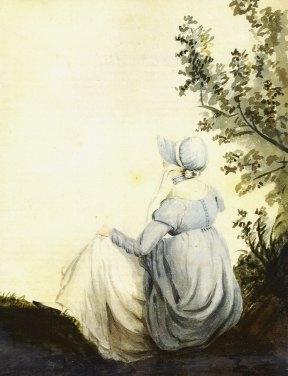
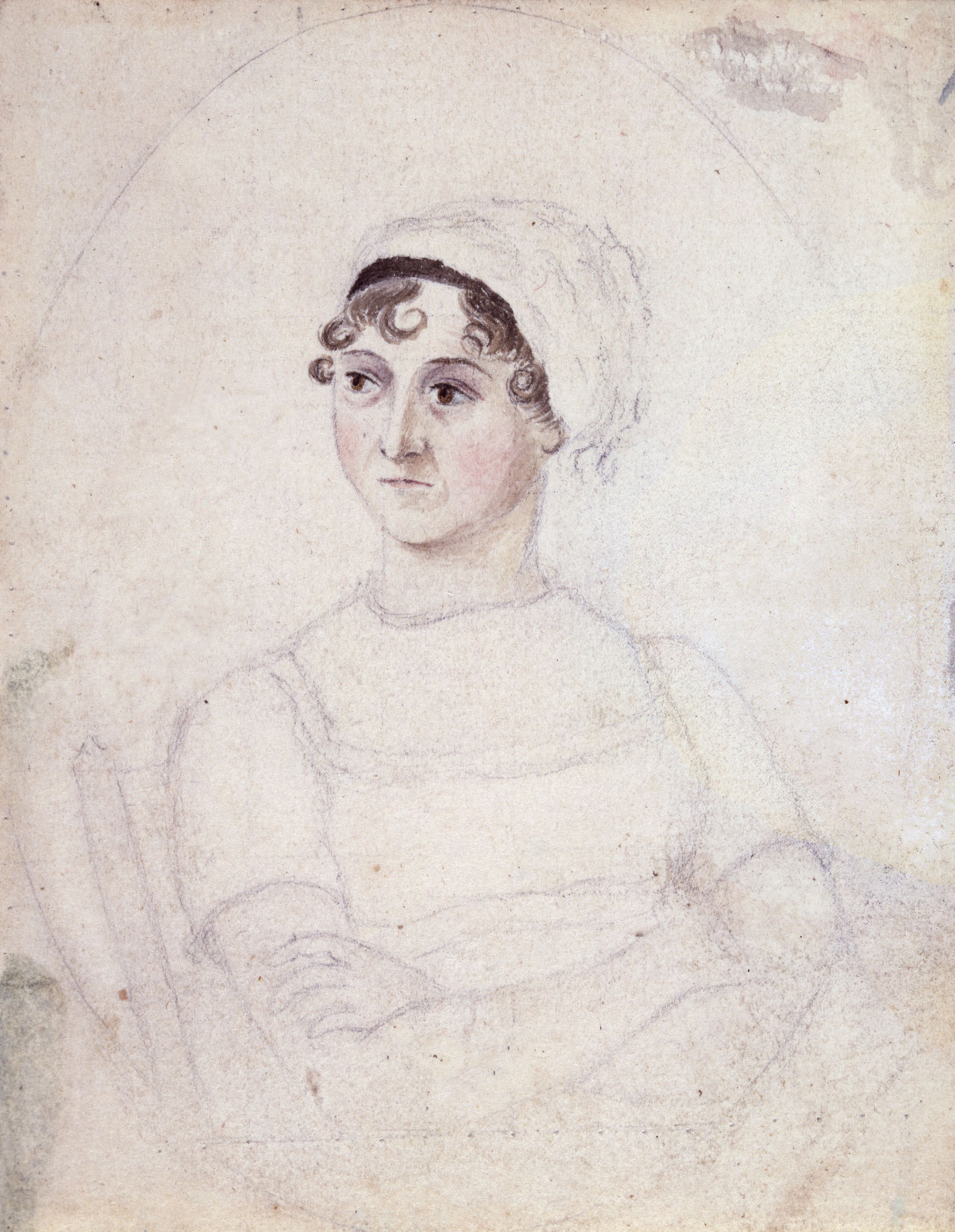
There are only two authenticated pictures of Jane Austen, both drawn by Cassandra. The first sketch is seen in nearly every edition of her books. It was not considered by her family to be a very good likeness. The second is a woman, dressed in blue, sitting outside. She faces away from us. It leaves us to imagine what she is looking at, or thinking. I rather like this image of her.

Saturday, 19 January 2013

Fathers and Sons, by Ivan Turgenev

Anyone who takes a look at my bookshelf can tell you I like a nineteenth century novel. While it is the Victorians who really have my heart I do branch out occasionally. Ivan Turgenev is one of the lesser known Russian authors - outside of Russia that is. During his lifetime he rivalled Tolstoy for popularity, and his signature work is Fathers and Sons. Having enjoyed his novella First Love, I rather expected more from this novel. It is an interesting insight into the divides in mid-nineteenth century Russian society, but in his attempt to create characters that are emblematic of both the nihilistic and the westernised schools of thought, I felt they began to lack actual character. I suspect this problem is exacerbated by the stifling censorship Russian artists found themselves under; this is especially clear at the end of the novel.

As you can probably guess from the title, the book tells the story of two generations of Russians: Nikolai Kirsanov - a wealthy landlord, his son Arkady Kirsanov, and Arkady’s friend Yevgeny Bazarov. Bazarov is a nihilist and has recruited the impressionable Arkady to his cause. At the beginning of the story they have returned to the Kirsanov lands from St Petersburg, and find their philosophy brings them into conflict with Arkady’s father, and uncle Pavel. They both belong to the older generation of Liberals who admire Western values. We also meet in the novel characters who represent traditional Russian views, particularly Bazarov’s parents. These conflicts are tacked onto a mish-mash of lovers, broken hearts, marriages, and even a duel.

At the time of its publication the novel inspired much debate. The conflicting opinions over Russia’s future is apparently historically accurate. The young generation insisted that it did not recognise itself in Turgenev’s depiction. Likewise, the older generation did not like its depiction, although both thought the other well described. It is something of a relief that the generational bashing we see in bollocks newspaper articles (Gen Y is narcissistic, the baby boomers are greedy) is nothing new. At times though I wondered if the real answer is that neither is very well depicted.

It isn’t bad. I’m not saying ‘it is a terrible novel, what have the Russians been thinking for 150 years!’ I just found it uncompelling. This is partly because Turgenev relies too much on telling us things, rather than making them be. Bazarov’s mother is an excellent example of this. For most of the book she bursts into tears every time she thinks of her son, and professes herself almost to frightened to talk to him. Turgenev devotes a few paragraphs to describing this woman, her superstitions, how she doesn’t read books or write many letters, her phobias of mice, frogs, sparrows etc etc. Then suddenly asserts that she is ‘in her own way not at all stupid’. Really? Because you kind of convinced me she was an incredibly stupid woman.

The main problem with this novel, though, is the end. To give a nice neat ending Turgenev resorts to killing off a character. It is done in a particularly ridiculous way. This ending enabled him to get the book published without incurring wrath from the censors. Anything other than an acceptance of the status quo in Russia would have been risky and Turgenev had reason to be wary, having been exiled to his country estates once before. One does wonder what he would have written if he could have. It certainly reads like a missed opportunity.

Saturday, 15 December 2012

Umbrella, by Will Self

I started reading Umbrella by Will Self a few months ago, but only managed 50 pages or so before I had to take to back to the library. Granted, it was a pretty busy time for me, and due to its popularity I only could borrow it for two weeks, but I struggled through those 50 pages. Not quite willing to give up on it though, I requested it again, this time finishing the book. It is an audacious, exhausting and eventually compelling read.

Umbrella follows a few characters over different periods of time. Dr Zack Busner is a psychiatrist working in post-World War II London, and an elderly man in contemporary London. Audrey Death is a working class girl in London’s east end, who becomes a munitions worker in World War I, and eventually one of Dr Busner’s patients. Her brother Stanley Death enlists as a soldier in World War I, and is sent to the front as a gunner. Audrey has languished, in a catatonic state, in psychiatric hospitals for decades before Dr Busner suspects some of the patients are misdiagnosed encephalitis lethargica sufferers and treats with them with new medications - bringing them back to awareness. This is based on real life events familiar to many through Oliver Sacks’s Awakenings.

Self’s novel meanders around this backbone of character and plot. It is a stream of consciousness novel, told in third person and present tense with no chapters. The focus of the novel can shift even mid-sentence, from Audrey to Stanley or so-on. It is at times maddening, one cannot mindlessly drift through the pages. It is a remarkable achievement though that you are always clear whose thoughts you are following. Throughout the text are italicised words or phrases; these seem to represent conscious thought on behalf of the characters, the words they are hearing within their own head. Self’s style is particularly effective in the blurring of Stanley’s own mind between his wartime experience and ‘normal’ life.
We’ll have to reposition! He orders the section at the end of a long burst - and Adeline abandons the cover of the low wall to go forward and reconnoitre. Look at Her! Her skirts dragging through the muck, her proudly hatless head held high….Stanley rises and floats back to the madness of the tea party.
I did think that the sections on Stanley later on in the war were, well odd. They weren’t badly written - in fact they were clever and even amusing in their own right - but I wasn’t sure what they meant. Whether they were real or not. Whether it was even Stanley telling us this story. Against the intense realism of the rest of the novel they just didn’t seem to fit.

At times you could almost imagine Self had just spewed ideas out onto his typewriter. It is a very deliberate novel though: while it seems to be overflowing with ideas, towards the end everything begins to come together. The encephalitic patients have ’tics’ or regular repetitive movements. In Audrey’s case she is repeating the movements she made as a factory worker; in a sense her tics become emblematic of the mechanisation of our world that has occurred since her birth. Family breakdown, women’s lib, the blurring of the class system, it all adds up to a summation of the 21st century. Reading Umbrella can be compared to reading a puzzle: at first it seems like a big pile of thoughts, random and messy, but slowly a shape begins to form and everything finds a place until you are left with a complete picture.

Will Self was widely tipped to win the Booker prize that went to Hilary Mantell’s Bring Up The Bodies. I’m sure he was disappointed not to, as this is a brilliant novel. Had he published it the year before I doubt it would have made the shortlist with the controversial focus on ‘readability’ the Booker panel emphasised that year. I had to make an effort to read it at first, but my persistence paid off.

Sunday, 9 December 2012

The Chrysalids, by John Wyndham

As a teenager I read the usual dystopic novels: The Handmaid’s Tale, 1984, A Brave New World. Somehow I managed to omit John Wyndham from my nerdy reading list. What a mistake. Thanks to my favourite nerdy TV show (ABC‘s First Tuesday Book Club) I picked up The Chrysalids, and I’m glad I did. It is an inventive post-apocalyptic story that had me completely hooked.

The Chrysalids is set a few thousand years in the future, after what is strongly indicated to be a nuclear disaster. It is a coming of age story of David Strorm. David lives on a farm, on something akin to a frontier landscape, society having being reduced to a pre-industrial form. There is a memory of the ’old people’, a technologically advanced society who were all but destroyed by what they know only as ‘Tribulation’. Wyndham creates a strong set of rules that David’s community live by; they practice a fundamentalist form of Christianity, one that is obsessed with the ’true image’. Genetic mutation is common, but also hunted out and destroyed. Nearby are the fringes: land that is wild, where no pure strains can be found. Humans that are found to be mutations are sterilised and abandoned to the fringes. David and a small group of other children are telepaths, something they realise they must conceal if they are to avoid that fate.

David’s father, a prominent man in his community, takes his religion seriously, hunting out genetic mutation in his crops and household with zeal. We learn the fate of some of those not lucky enough to fit the norm; in particular the story of a mother whose newborn has a small mutation is a heartbreaking moment. As it is told through the eyes of a young boy we are spared the gruesome details, nonetheless, the sense of danger Wyndham creates for his protagonist feels very real. Wyndham also hints at a wider world - different communities in other places who also survived ‘Tribulation’. David’s uncle (and confidant) Axel, has travelled as a sailor, and is unable to follow the orthodoxy of their community.
most of them - whether they have seven fingers, or four arms, or hair all over, or six breasts, or whatever it is that‘s wrong with them - think that their type is the true pattern of the Old People, and anything different is a Deviation….You start asking yourself: well, what real evidence have we got about the true image?
Wyndham’s world building is excellent, but it is his characterisations that really make this book interesting. David himself is an atypical lead in that he is often unable to do the right thing, occasionally cowardly, and unprepared when he really shouldn’t be. It is the small characters though, that really make this book. Wyndham imbues minor characters with a sense of humanity, and creates real pathos, such as the aforementioned mother and child. One of the most interesting examples of this are the other telepath children: despite making only the briefest of physical appearances, some have a strong presence.

I’ve agonised a little over the ending, not being completely satisfied as it is dangerously close to deus ex machina. When I began to see it coming I felt bitterly disappointed. Thankfully Wyndham saves the book by not tying up every storyline neatly. While for some characters the ending is happy, the reality that others are left to face is dark and dangerous. Even the ‘happy’ ending leaves us asking some moral questions.

While it is certainly a novel of its time, it also asks questions that are relevant today. While we probably aren’t so concerned about nuclear apocalypse, we do face huge environmental challenges that could have similar impacts. Wyndham also asks us to think about who we will tolerate in our society: where does mutation end and evolution begin? How ‘superior’ are we as beings? Crucially, how do we treat those we deem ‘lesser’ beings to ourselves? Religious fundamentalism is probably even more of an issue in our society than it was when the book was written. People like David’s father are on our news every night.

When so many science fiction classics date badly, Wyndham’s imagined future seems horribly plausible. The book is short and fast paced, and the characters are strong. It is an enjoyable read, that still makes you think about the society we live in, or want to live in.

Saturday, 24 November 2012

Wulf, by Hamish Clayton

This a good book. A really good book. It’s one of those books I’m sure some readers won‘t enjoy, but surely even then people will have to recognise the skill and ambition with which this book is written. Hamish Clayton recently won the NZ Best First Book Award for it. That’s right. This fabulous book is his debut novel.

Ostensibly Wulf is a piece of historical fiction; it tells the story of a group of white traders aboard the Elizabeth in 1830s New Zealand, and the story of Te Rauparaha, the legendary Maori rangatira (chief). Their stories came together when Te Rauparaha paid the Elizabeth’s captain, John Stewart, to transport himself and a group of his warriors to Banks Peninsula, where they slaughtered an estimated 1200 people.

The story is told from the point of view of a sailor who (apologies if I’m wrong) remains unnamed throughout the novel. Te Rauparaha’s history is told to him by Cowell, another historical figure, who travelled with the Elizabeth from Sydney as its translator. Our narrator is captivated by New Zealand, and Clayton gives an excellent sense of New Zealand as seen by this British man’s eyes for the first time. The Wulf of the title mostly refers to Te Rauparaha: a foreign animal used by foreign men as a nickname for this native man.

Telling Te Rauparaha’s story by remove by white men could seem a cop out - a modern author afraid to put himself into a pre-colonial Maori mind. But, actually, this is Clayton’s most ambitious theme in his novel; how can these two white men be a reliable source for Te Rauparaha’s story? Where does fact and the man himself end, where does myth and legend begin? How can these foreigners interpret his actions without an understanding of the culture it came from? Are the scenes of cannibalism fact, or are they an exaggeration - the acts of savages as believed by the white man? How accurate is their account of history when every sailor has a different name for what we now know as Kapiti Island (Kopitee, Cobarty)? This is not so much history as told by the victors, but as told by the passers-by .
Their sunsets were part of our story, just as the arrival of our ships had already become a part of theirs. We were, us and them, part of the same story, different verses woven into the same song.
This is also a tale of when two disparate cultures came together, when modern New Zealand was born. It is a story of the irrevocability of contact; once ships and muskets arrived New Zealand could never be the same. Just as Maori civilisation was changed, so to were the whalers and traders, and eventually the settlers. After all it is not just Maori who have a traditional oral culture.
Had we ever stepped upon those unmarked burial grounds concealing the shafts of ancient war, where fossils of old Angles’ battle lay, and became poetry, slowly petrifying towards a state of lore?
Wulf is also based on an ancient Anglo-Saxon poem, first recorded in the eleventh century, Wulf and Eadwacer. It is a short poem, and appears in two different translations at both the beginning and end of the novel. It is a particularly ambitious poem to base a novel on as no-one appears to be sure what the poem is about. It is generally thought to be a lover’s lament, sung by a woman, but no-one is sure if the Wulf and Eadwacer she sings of are the same person or not, so it could be a love triangle. Alternatively it has been read as a mother’s lament for a child. There are clear features of the poem that are recognisable in Wulf. Certainly the ‘whelp’ at the end of the poem features in Clayton’s novel in a memorable, historically accurate, detail.

Clayton’s novel is complex, I could spend pages dissecting what makes this book so clever, yet it works beautifully as nothing more than a great story. It is hard for me to be sure, but I think that this novel would also be a great read if you knew nothing of New Zealand, its culture and history. It is rare to read a book that lives up to its hype. I’m excited to read what he publishes next.

If you are interested Radio NZ have featured it as their book reading - available online here.

Friday, 9 November 2012

The Snow Child, by Eowyn Ivey

Eowyn Ivey has burst onto the bestseller lists with her debut book The Snow Child, based on a Russian fairytale. Ivey’s version is set in early twentieth century Alaska, where Jack and Mabel have settled in an attempt to escape their grief for the children they never had. During a bleak winter they build a little girl out of snow. The next morning footprints lead away from the spot where the snow child stood, and a girl is glimpsed in the forest.

Ivey’s depiction of homesteaders in Alaska is engaging, and it comes as no surprise to learn that she is Alaskan herself. Her personal knowledge of how to live off this wild land is put to good use. The land itself is also bought to life; the long bleak winters of frozen rivers and deep blankets of snow, followed by the mud and green of spring, are all beautifully described without leaving the reader feeling as thought they are wading through page after page of nature.

Jack and Mabel are wonderful characters. As they are new to this landscape we can be introduced to Alaska through their inexperienced eyes. Their relationship is beautifully portrayed, and for me that was one of the highlights of this novel. Ivey captures the care and tenderness each feels for the other, and the misunderstandings too. They are both torn apart and bound together by their shared grief. The harsh Alaskan landscape, and the entrance of Faina (the snow child) into their lives, forces them to adapt; their resilience is moving. Mabel’s journey in particular - from a comfortable middle class background, depressed and marooned in the wilderness, to, finally, a strong frontier woman, is especially well portrayed.

As a foil we are also introduced to their neighbours, Esther and George Benson, and their sons. They are salt of the earth homesteaders, and provide Jack and Mabel with much needed support early in the book. They also bring a dose of reality to the novel. When the story could feel quite claustrophobic - a couple alone in the wilderness, apart from an ethereal child - the Bensons are representative of the wider community. While Jack and Mabel are outsiders the Bensons belong in Alaska. Ivey uses them as the insider voice, providing the know-how of how to survive in this extraordinary landscape.

The question asked by this novel is - how real is the snow child Faina? Is it just coincidence that she appeared after Jack and Mabel built the snow girl, or did they really conjure her to life? Ivey plays with this idea throughout the novel, never really making her answer clear. I’m not sure she does this entirely successfully though, but I will get to that in a minute. What she does do well is find a way to tie in the original fairytale - Snegurochka - to the story. Mabel is familiar with the fairytale from her childhood. It becomes an obsession of hers, especially as in all the variants of the fairytale the snow child never stays. This is all done with a lightness of touch; Mabel’s worrying comes across as something akin to normal motherly concern.

Faina herself is very thinly drawn. The book is more about the effect she has others, than her as a person. Ivey does well to make her seem part of the Alaskan landscape: beautiful but with wilderness at her core. I didn’t quite understand why though, if Ivey wanted to preserve the mystery of Faina, she hinted at an explanation for Faina’s presence in the wild, one that was essentially quite grim. This happens reasonably early in the novel, and I initially thought that Ivey had explained her background, but then the more ethereal/fairytale origins continued to be important. I’m not sure it was the right decision. I struggled to ‘buy’ the mystery, partly because Ivey’s explanation of how she came to be alone was so believable and heartbreaking.

It isn’t a perfect novel, but it is an impressive debut. There was a lot to like in Ivey’s characterisation and her depiction of Alaska. I took it on holiday with me, and it was a great holiday read. It isn’t a groundbreaking novel, but I enjoyed it enough that I’d check out books Ivey publishes in the future.

Wednesday, 31 October 2012

Picturebooks

Thanks to the new addition to the household I’m finally able to indulge in one of my great pleasures - children’s books. At the recent Canberra Lifeline Bookfair I spent hours (not kidding) scouring through the stacks of picture books looking for goodies. I certainly found some old favourites, and even discovered some new ones. It inspired me to share with you some of the books and authors I‘ve been reading recently.

The Berenstain Bears and The Spooky Old Tree
‘Three little Bears. One with a light. One with a stick. One with a rope’
I loved this book when I was little. Jan and Stan Berenstain wrote what has become an empire of children’s books. Often their Bears series is moralistic, and I’ve seen many that I wouldn’t be interested in. This one though, is a real charmer, as is the similar (but not quite as good) Bears in the Night. The story is simple: as the bears climb through the spooky old tree they gradually lose their belongings and gain the shivers. The language has a lovely rhythm and rhyming scheme, and is repetitive without being annoying. This makes it perfect both to read to young children, and for older children starting to read to themselves.

Judith Kerr
An old favourite who is still publishing - the delightful One Night At The Zoo was released in 2009. Kerr is best known for her first book The Tiger Who Came To Tea; it’s a great book - there is something slightly anarchic about this unexpected guest who proceeds to eat all the family’s food. It’s funny, appealing to a child’s sense of naughtiness. The Mog series are also deserving of a prime spot on the book shelf. Originally from Germany (yes, she also wrote When Hitler Stole Pink Rabbit) she thought learning to read in English was very hard so she puts a lot of work into making the book accessible for early readers. It’s easy to focus on entertaining children with a book, but encouraging children’s confidence to read for themselves is so important. It’s lovely to have books that do both.

Emily Gravett
Emily Gravett is more of a newcomer, and if you thought the aforementioned Tiger was wicked, wait until you see what can happen in her books. She is most well known for The Odd Egg, in which a duck is teased by the other birds for not having an egg. When he finds an egg of his own he is delighted but then it hatches with unexpected - and for the other birds unfortunate - results. It’s fantastic. One of her newest offerings is a version of the three little pigs, in which she actually makes you feel sorry for the wolf. Gravett illustrates her own stories, and plot is often conveyed in the pictures. This makes them great for less confident readers as they can still get the punch lines purely from the illustration.

Last but certainly not least

Helen Nicoll and Jan Pieńkowski
The Meg books, about a witch, her cat (another Mog) and her friend Owl, were first published in the 70s. The stories are simple and the bright block-colour pictures are real eye catchers. Meg is an unsuccessful witch: none of her spells ever work, and sometimes they have disastrous, but funny, results. The books are short, but exuberant. There are about fifteen in this series, most of which I have never read, but I love the ones I remember. The author Helen Nicoll passed away recently, so we won’t see any new ones, but I think these books will remain popular for years to come.

It is one thing to pick the best new books, or old favourites, to read with your children. But more important is to just read to them, with whatever you choose. Who has ever met a child who doesn’t love a story? I’m sure I’ll get sick of reading the same book over and over, but it is such a precious gift to give your child. I could always do what my father did when he got sick of reading Harry By The Sea - turn it into a (much shorter than the book) song.

Saturday, 29 September 2012

Ragnarok, by A.S. Byatt

Ragnarok by A.S. Byatt is the latest in the Canongate myths series, which has had myths re-imagined by contemporary authors such as Jeanette Winterson, Philip Pullman and Margaret Atwood (whose retelling of the Odyssey as The Penelopiad is highly recommended). As you can probably tell from the title, Byatt has chosen the Norse myths, from creation through to Ragnarök - the end of the world. It is much more a literal retelling of the myth than the freewheeling interpretations other books in the series make. She does however include a framing device of a young girl, called only the thin child, living in World War Two Britain. We read the myth through her eyes, a device that is only moderately successful.

Much of Ragnarok is Byatt’s version of the Norse myths. Instead of following modern conventions of character, she writes them in a style more akin to their original forms. The gods are archetypal, and their behaviour is symbolic of the world around us, rather than a psychological portrayal. The prose is, as expected, beautifully written. The imagery she conjures up of Ginnungagap (the void before creation), of Jörmungandr (the serpent who circles the world), and the final awful silence after Ragnarök, is vivid and engaging. I’ve read a reasonable amount of classical epic poetry, so I wasn’t unfamiliar with this form of storytelling. I wonder though whether some readers will struggle to engage.

Byatt intends the thin child to be our window into this mythical world, and uses her to make two thematic links between our world and myth, which I’ll get onto in a bit. I don’t think this device really works. Partly this is because the thin child herself is a passive interpreter, and is as characterless as the archetypal gods. Rather than giving us insight to the Norse myths, I found her an interruption to the narrative flow of myth, and felt the explanatory role she played in interpreting the stories she is reading was unnecessary.

Byatt was herself a young girl during World War Two, and the child is a thinly veiled self portrayal; apparently Byatt even read the Norse myths at this age. In this child’s mind the destruction of Midgard and the wartime threat of impending doom become inextricably linked. Humans, like the gods of Asgard, are trapped in never-ending cycles of violence. The people who originally told these myths may have disappeared, but the truths the myths portray are as valid as ever.

The child is also a device to explore our modern natural world; as she walks to school, or plays, we are told of the plants and birds she sees - an ode to the British countryside. Over the course of the novel, as the myths move from creation to the destruction of the world, Byatt slowly draws a parallel to the state of our environment. The countryside Byatt describes is disappearing, and the same thing is happening all over the world. The world as we know it is in peril because of human behaviour. The Norse gods continue their drinking, brawling and general cavorting while they wait for Ragnarök. As do we.

Of the two thematic points I think the second is more effective. It is more subtly handled. I wondered if I was reading too much in it until I neared the end of the novel and decided it was intended. Weirdly the book contains what is clearly an afterword (not that it is labelled as one) in which Byatt explicitly explains her intentions in writing in mythic style, and her themes. The fact that it was felt necessary, I think, shows what is problematic about this book. I enjoyed it, but at times I felt I enjoyed it at an intellectual level, rather than being drawn into the story. Whenever I felt the story was getting underway, the thin child popped up to explain the myth, or a purely thematic passage appeared. It is a small book, but I felt it would have benefited from less being attempted; the combination of her themes, the myths themselves and the secondary story in wartime Britain is just a bit much being crammed in.

Byatt is a compelling writer - both Possession and The Children’s Book are fantastic novels. While Ragnarok has its faults it is an interesting addition to the Myths Series. Her depiction of the mythic world is beautiful. She captures both the joy of life and creation, and the cruelty in the stories, and Ragnarök itself is vivid, yet unsentimental.
The wolves tore the throats out of the horses and turned to the drivers of the chariots, sun-woman, night-mother, moon-boy and the boy in the bright chariot of day. Somewhere in the middle air, as the chariots rolled in their fall, the wolves tore apart sun and moon, day and night, drank their blood and swallowed them.
It isn’t a book for everyone, but I did like it. Just, perhaps not as much as I would have liked.

Sunday, 16 September 2012

Persuasion, by Jane Austen

Jane Austen is one of the most loved, but also misunderstood, novelists. Her wonderful romances, more widely known to many now through television, have earned her a reputation as a girl meets rich guy, girl marries rich guy writer. This ignores the fact that many of her ideas were quite revolutionary for the time. For those who are interested I highly recommend Claire Tomalin’s biography of Austen; it is a fascinating account of Austen’s family and society, and the difficulties she faced as a female writer. It changed how I viewed her novels; it made me love them that little bit more, especially this, the most revolutionary of all her novels - Persuasion.

Eight years before the beginning of this novel Anne Eliot, middle daughter to a baronet, was persuaded to break off an engagement to young naval officer, Frederick Wentworth, largely because her family believed him to be beneath her in social standing. It would also have been an imprudent engagement as he did not have the income to support a wife, and no guarantee of ever doing so. He has now returned to the neighbourhood a Captain in the Royal Navy, and rich. Charming and charismatic, he is seen as quite the catch and the local girls all determine to fall in love with him. Anne is now 27, past the prime age for marrying(!). Overlooked and unappreciated by her own family she deeply regrets her refusal. Due to the social conventions of the time, it is impossible for her to communicate this to Captain Wentworth. She can only watch, and hope.

Of course, there is the inevitable happy ending. But in a way, this is what makes the novel so remarkable. Anne is the daughter of a Baronet (a hereditary knighthood, the closest thing to being noble other than being noble). She marries a man who is not even a member of the gentry. While he is rich, he is a self-made man, having earned his fortune and title through his career in the navy. Austen is so often criticised for being stuck in the class system of her day, but to me this heralds the massive social changes of the 19th century - the beginning of the decline of the aristocracy in the face of ambition. Of course Austen had no way of knowing what was to come, but her reflection of society is quite cutting edge.

In a world where to be mistress of a house was the greatest degree of autonomy most women could achieve, the desire of Austen’s heroines to marry for love, not necessity, is a bold choice. Marriage was generally arranged by parents, and in the absence of a large dowry, being very beautiful was the surest way to marry well. Her heroines do not settle for a mediocre marriage; they aim for the best in life and take the gamble. While it works out for them all, Austen understood well the difficulties in being a spinster. She, her sister, and widowed mother were eventually dependent on their brothers to arrange even basic things for them. Is it so bad that in her novels she is living the dream? Persuasion is the ultimate example - Anne is aging, and her father has squandered his money to the extent her dowry is in doubt. Nonetheless she gets a second chance. Her loyalty and good character are enough to bring about her marriage to the man she loves. Austen, in her early forties, ill and near death, writes a happy ending that she and her sister never got. Every time I read Persuasion I find it beautifully poignant.

One of Austen’s greatest qualities as a writer is her wit. She lays bare the hypocrisy of her society, where merit is too often based on wealth, not quality of character. She can be scathing, yet is also very funny. Persuasion is perhaps less humorous when compared to the sparkling Emma, for example, but it finds a gentle sense of humour in Anne’s family - the hypochondriac Mary, or her snobbish father who is so vain as to have filled the house with mirrors, which was an expensive habit for the time. While it lacks the humour of her more grotesque characters, what this novel does have is a lot of heart. Austen was a ferociously intelligent woman, at a time when female intelligence wasn’t appreciated. Persuasion was written at a time when she had received some recognition for her novels, and a small income had given her some independence. It is a more mature, well rounded work - perhaps some of that anger had abated.

Classic novels seem to be a love or loathe thing, those who loathe them finding them wordy or difficult to relate to. While the style of writing is indeed different, the craft behind it is impeccable. Society has changed in the two hundred years since Jane Austen sat at her little table and wrote this novel, but people haven’t. Pompous Sir Elliots, manipulative Mrs Clays, and faithful Annes, still exist. It isn’t a story about marrying a rich man; it is a story about marrying someone who loves and values you. Austen has inspired women with this dream for centuries; no wonder we love her so much.

Saturday, 18 August 2012

Bring Up The Bodies, by Hilary Mantel

Wolf Hall won Hilary Mantel the Booker Prize for her account of Thomas Cromwell, and the role he played in the ascension of Anne Boleyn to the throne. I absolutely loved the book. Through Cromwell, Mantel found a fresh take on the Tudor era that we all know so well. The book was huge, but encompassed a very specific period of events, and ended, I thought, perfectly, so I was not without trepidation when I heard that it would now be the first in a trilogy. Would she ruin that ending - leaving us with our own knowledge of history to fill in the gaps - by fleshing it out for us? By the time Bring Up The Bodies arrived in its resplendent crimson and gold cover on bookshelves, my appetite had got the better of me. I couldn’t wait to dive back into Mantel’s version of Tudor England. It didn’t disappoint.

Rising up from his origins as a common London boy, Cromwell is now an established, powerful figure at court. He is the man Henry VIII trusts to get things done, and not without good reason. The only thing Cromwell cannot do is magic up the son Henry is so desperate for. Having rid him of one wife, it falls to Cromwell to rid him of the second. As we all know, this will end with Anne Boleyn on the executioners block, and Jane Seymour on the throne. It is how Cromwell, the Seymours, and the Boleyns get there that is so thrilling.

As familiar as the history is, the novel is about Cromwell. It is told exclusively from his point of view. Unusually, considering this is the case, Mantel does not use first person (I), but rather the third (he). We sit inside Cromwell’s head, and yet we are kept at ever so slight a distance by this choice of voice. It is the same technique used in Wolf Hall, with one slight difference. In the first book some readers found the unrelenting use of ‘he’ difficult to keep track of. For this novel, where Mantel thinks there may be some confusion as to who ‘he’ is, she specifies ‘he, Cromwell’. It does reduce the confusion that, I admit, I found a little distracting at the beginning of Wolf Hall until I got the hang of it. It also adds something to the text. In a sense his name becomes his own epithet. Cromwell becomes this incredibly solid presence, instead of the slippery figure he could be in Wolf Hall. This Cromwell is a powerful figure; his name invokes fear at court. Henry VIII might need his title to invoke his sense of power - Cromwell needs only his name.

Cromwell is a fantastic character: intelligent and cunning. If you are lucky he is a loyal friend; if not, being on Cromwell’s bad side is a dangerous place to be. He is an admirable character, and perhaps just likeable enough, despite his ruthlessness. Mantel does a fabulous job of fleshing him out as a man. His mind wanders throughout his life, flitting to memories of his childhood, his time in Europe, and the wife and two daughters who died young.

The dead hover throughout this novel, haunting Cromwell. Not without reason is the second group in the list of characters at the front of the book ‘The Dead’. It would be impossible to understand without knowledge, not just of his family, but also of the executed Cardinal Wolsey and Thomas More. A particularly beautiful passage at the beginning of the book, regarding Cromwell’s sometime adversary, Thomas More, was for me the moment I sunk completely into the world of this novel
What could he do but splash to the scaffold, on a day in July when the torrents never stopped, except for a brief hour in the evening and that too late for Thomas More; he died with his hose wet, splashed to the knees, and his feet paddling like a duck’s. He doesn’t exactly miss the man. It’s just that sometimes, he forgets he’s dead. It’s as if they’re deep in conversation, and suddenly the conversation stops, he says something and no answer comes back. As if they’d been walking along and More had dropped into a hole in the road, a pit as deep as a man, slopping with rainwater.

Other deaths haunt this novel. Because it is historical fiction, we know how it ends. Two deaths are important to our understanding, the first being the inevitable death of Henry VIII. The precarious position England would find itself in at his death is bought home by a historical occurrence early in the novel: Henry’s jousting accident in 1536. He was badly injured - it is said it was believed to be fatal at the time - and it is known that within days Anne had miscarried a male child. Mantel makes clear, through Cromwell’s frantic mind, that if the King dies, England would be on the brink of civil war. Henry may be verging on the tyrannical at this point, but an England without Henry is unthinkable. Anne’s failure to produce an heir is now unforgivable.

The second death is that of Cromwell himself. I know when his life ends, I can look up the exact date of his death. I know the means, but I don’t really know the how. Nor does Cromwell. He does know that a world without Henry VIII is not one that will be kind to him. His position at court is dependant on Henry’s goodwill. Mind you, this could be said of almost anybody. Cromwell has the advantage - while Henry is alive, if he is clever enough, ruthless enough, he can stay in Henry’s favour. Therefore he does whatever it takes to keep Henry happy. Perhaps the key lines to the novel are these thoughts as the trial of the men accused of adultery with Anne Boleyn approaches
He needs guilty men. So he has found men who are guilty. Though perhaps not guilty as charged.

Mantel assumes a certain level of historical knowledge, and plays with it. She plants seeds of ideas throughout the novel, hinting at what we know for these peoples’ future. She stays within the facts of history, but it is her ideas of how it unfolds that make it so gripping. The biggest criticism that can be made of this book is that it is so clearly a second book in the trilogy; it just isn’t quite satisfying enough - I immediately wanted the third book to read, which is hardly the sign of a bad book. It may be familiar ground to that covered in Wolf Hall, but it is such an interesting period of history that there are plenty of ideas for Mantel to explore. I enjoyed every page; the prose, the characters and the Tudor world are all beautifully rendered.

Sunday, 1 July 2012

Railsea, by China Miéville

China Miéville is one of my favourite authors, so I’m pleased to finally be reviewing his latest offering: Railsea. Miéville writes what he calls ‘weird fiction’ - not strictly fantasy or sci-fi, but something that blurs the boundaries. He is attempting, within this, to write a book in every genre; so far he has written novels as diverse as a western (Iron Council), a sci-fi planetary romance (Embassytown), and crime fiction (The City & The City). Railsea is his young adult offering. Unsurprisingly, I enjoyed it; it is well written for the youth market, but is also clever enough to satisfy his adult readers.

Railsea takes place in a dystopic future of either our world, or one quite like it. Large bodies of water are nonexistent; instead, the lands people live on are divided by treacherous stretches of earth that may or not be poisonous (as is much of the sky). Crisscrossing these are train tracks, providing trade routes and hunting grounds to the train crews who work on them. Sham Yes ap Soorap finds himself apprenticed to a doctor on the moletrain Medes. They hunt the vicious beasts that live in the poison earth: the most profitable of these being the giant moles, or moldywarpes. While they hunt, Captain Naphi is on the lookout for one particular moldywarpe: Mocker Jack, the giant yellow beast that claimed her arm years ago. While she will stop at nothing to catch him, Sham discovers a quest of his own that will lead him down perilous tracks, perhaps as far as the ends of the earth.

What Miéville does best is world building. Apart from his three Bas-lag novels, all of his works take place within a unique universe. He is an absolute master of invention, and crucially in communicating his ideas in his books. Some of his worlds can take a bit of time to get your head around, but once you have done so they have a completeness and believability to them that is so often lacking in lesser writers’ works. Miéville explains his worlds very well, taking his time to lay the pieces before bringing it all together in your head. I remember reading Embassytown and feeling like I wasn’t quite understanding, then with one particular paragraph everything slotted into place. Talking to my husband later, he had the same feeling at the exact same place in the book. It is a real skill to be able to communicate so clearly his, often very weird, settings.

The book obviously contains a loose homage to Moby Dick, but that is only the start. It is jam packed with tributes to literature: Robinson Crusoe is referenced, and the works of R.L. Stevenson - with Treasure Island in particular coming to mind. It is also unashamedly meta-fictional. Miéville first widens the story to include further characters, such as the Shroake children; he then teases us with snippets of their story while always returning to his central character Sham
At last they pushed on, under a huge night, in the deeps of which upsky predators make sounds. The Shroakes-
-but wait. On reflection, now is not the time for Shroakes. There is at this instant too much occurring or about to occur to Sham ap Soorap
Miéville’s early work is not exactly known for its brevity; this narrative technique helps to keep the plot moving without dropping the Shroakes for long tracts at a time. It’s a clever ploy, and entertainingly written - reeling us in only to drop us again moments later.

One of the things I most admire and enjoy in Miéville’s writing is his language play. He has a knack of twisting words and grammar so they say not what they would normally, but exactly what he wants them to say. He imbues words with meanings of his own, that become important to the plot or ideas in his stories, such as ‘philosophy’ becomes in this book. His vocabulary is extraordinary, although perhaps at times beyond the young adult readers this book is aimed at. One of his quirks is that he has favourite words, and these can vary from novel to novel, but often these words will pop up. This has lead to what I affectionately think of as ‘the chitin game’, after a much used word in Perdido Street Station. Knowing which words in his early works he loves, you look out for them as you read new books. Which leads to scenes like my husband and I announcing ‘chitin’ abruptly into a room where we both had been reading in silence. Other words this can be played with include ‘puissant’, etiolate’, and words that start with ‘un’ but don’t usually.

A stylistic feature of this novel is the decision to use ‘&’ instead of ‘and’. Miéville also often starts his sentences with ‘&’. It is very striking - we are so used to the convention that you don’t begin sentences this way. Writers often deliberately flout convention - it is part of the skill of being a good writer. Just as you get used to it Miéville explains this choice in a short chapter directed at the reader. In which chapter, the antiquated spelling of ‘and’ is explained to have been replaced with ‘&’ because of its connection with the railsea.
‘What word better could there be to symbolise the railsea that connects & separates all lands, than “&” itself? Where else does the railsea take us but this place & that one & that one & that one & so on? & what better embodies, in the sweep of the pen, the recurved motion of trains, than “&”?
It is a lovely idea, which after all is what you read Miéville for.

He walks at times a fine line between his cleverness getting in the way of his stories or not. For me he manages to stay on the right side of the line. That’s not to say he isn’t without limitations. Characters can be a little underdrawn in his books. They are sometimes merely vehicles for the ideas he wants to explore, not believable people. This is a fair criticism of Railsea. It is obviously just not what he is interested in as a writer, though I don’t think this prevents his novels from having emotional impact. When it is important he manages to make you feel. I have mentioned he has a degree of vocabulary predictability, and this could also be said for his themes. Miéville is an ardent Marxist and these beliefs are often explicitly expressed in his books, something I find amusing rather than troublesome.

I’m something of a Miéville completist. He is also currently publishing a comic series Dial H for Hero that I’m buying, and enjoying. There is so much I love about his books; their inventive worlds being only the start. Miéville is an excellent writer of the dramatic set piece, huge battles and showdowns which are a joy to read. All of this is present in Railsea, so I was pleased to read it. I think it is also well targeted at its young adult audience, whereas I thought his children’s book Un Lun Dun may not have been. It is not my favourite of Miéville’s works, but he is one of my favourite authors writing today. I can’t wait to read whatever comes next. For those of you whose appetite has been whetted by my review, here is Covehithe , a short story published on The Guardian.